Galaxy S25 Ultra vs iPhone 17: Flagship Showdown
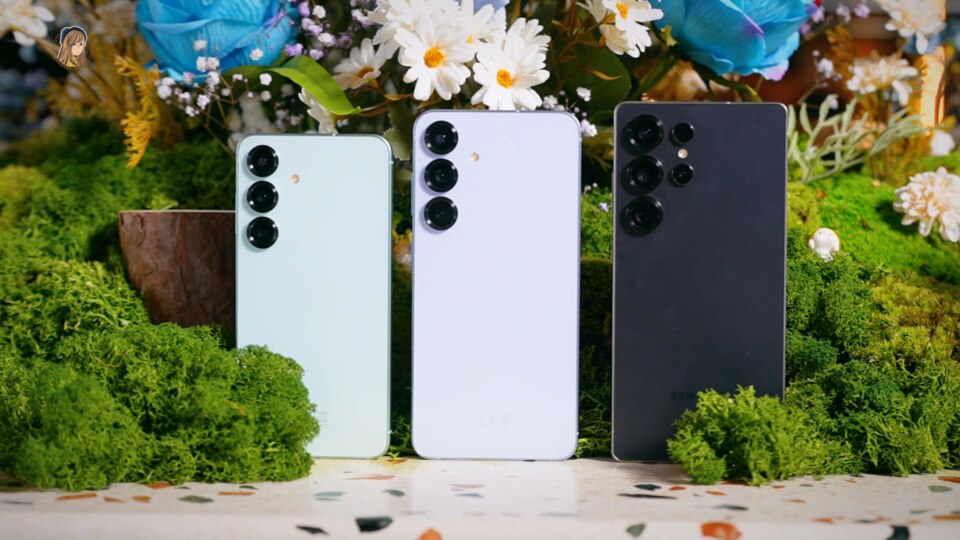
The Galaxy S25 Ultra and the iPhone 17 sit at opposite ends of how the two biggest phone makers think about a flagship. Samsung's phone is the bigger, more expensive, more configurable option built around a stylus and a four-camera system. Apple's phone is the standard-bearer of a much wider lineup, priced to compete with the OnePlus 13 and Nothing Phone (3) rather than with Samsung's own Ultra tier. Comparing them head to head only makes sense if you understand that mismatch going in — but plenty of buyers genuinely cross-shop these two, so it's worth working through where each one actually wins.
Size and price set the tone
The S25 Ultra starts at $1,299 and climbs past $1,900 for the 1TB configuration. The iPhone 17 starts at $799 for 256GB, with a 512GB option above it. That's not a small gap — it's the difference between "flagship" and "flagship-adjacent," and it shows up everywhere else in the comparison. Samsung's titanium frame, Gorilla Armor 2 glass, and 12GB of RAM as standard are what you'd expect from a phone competing near $1,300. Apple's 177g aluminum-and-glass body and A19 chip are tuned for a phone that needs to undercut its own Pro models while still feeling premium.
Display: bigger vs sharper
Both phones use excellent OLED panels, but they're built for different jobs. The S25 Ultra's display is larger and higher resolution in absolute terms, tuned for reading small text on Samsung's S Pen note-taking apps and for split-screen multitasking that Apple simply doesn't offer at this tier. The iPhone 17's 6.3-inch LTPO Super Retina XDR panel runs at 2622x1206 with 460 pixels per inch — a genuinely sharp, color-accurate screen that adapts its refresh rate from 1Hz up to 120Hz for both battery savings and smooth scrolling. Neither display is a weak point; the real difference is whether you want Samsung's expansive canvas or Apple's tighter, denser one.
Cameras: four lenses vs two, but that's not the whole story
This is where the price gap is most visible on paper. The Galaxy S25 Ultra packs a 200MP main sensor, a 50MP ultra-wide, and two telephoto lenses — a 50MP 3x and a 10MP 5x/10x periscope — giving it reach that no iPhone in this price range can match. If you regularly photograph distant subjects, wildlife, or anything where optical zoom matters, the Ultra's telephoto flexibility is a real, measurable advantage.
The iPhone 17 counters with just two rear cameras — a 48MP main and a 48MP ultra-wide — but Apple's computational photography pipeline, color science, and video stabilization remain some of the most consistent in the industry. For everyday shooting, portraits, and video, the gap between the two systems narrows considerably; it's specifically in long-range zoom and extreme low light where Samsung's extra hardware pulls ahead. Apple's front camera, at 18MP with an f/1.9 aperture, also outresolves Samsung's 12MP selfie shooter on paper, though Samsung's software processing is no slouch either.
Performance and software longevity
The S25 Ultra runs the Snapdragon 8 Elite for Galaxy, a chip tuned specifically for Samsung's phones and paired with up to 12GB of RAM across every storage tier. It's fast enough for anything you'll throw at it today, including sustained gaming sessions, and Samsung backs it with seven years of OS and security updates on recent Galaxy S flagships — matching Apple's own long-tail support commitment for the first time in the Android world.
Apple's A19 chip in the iPhone 17 is built on a newer process and, as is typical for Apple silicon, tends to lead pure single-core benchmarks even against Qualcomm's best. Where it matters in daily use — app launch speed, camera processing, multitasking headroom — both phones feel instant. The more relevant difference is software philosophy: iOS is tighter and more locked-down, Android (via Samsung's One UI) is more customizable and better suited to power users who want widgets, file management, and split-screen apps.
Battery and charging
Samsung's 5,000mAh battery is rated for up to 31 hours of video playback, a genuinely long runway backed by 45W wired charging. Apple doesn't publish a raw battery capacity for the iPhone 17, but its 40W+ fast-charging support gets you to 50% in about 20 minutes, and Apple's efficiency tuning between the A19 and iOS tends to produce comparable real-world screen-on time despite the smaller physical battery Apple typically uses. Neither phone will leave you anxious by mid-afternoon under normal use; the Ultra has more headroom for genuinely heavy days.
The S Pen is the real dividing line
Beyond price, the single feature that most cleanly separates these two phones is Samsung's built-in S Pen. If you take handwritten notes, sketch, or annotate PDFs regularly, there's simply no iPhone equivalent — Apple Pencil support exists only on iPads. For anyone whose workflow depends on stylus input, the Ultra isn't just the better phone, it's the only phone between these two that does the job at all.
Durability and ecosystem lock-in
Samsung's titanium frame and Corning Gorilla Armor 2 glass on the S25 Ultra are rated to survive drops onto rough concrete better than standard aluminosilicate glass, and the phone carries an IP68 rating for dust and water resistance — standard for this price tier. The iPhone 17's aluminum-and-glass build is durable in its own right, though Apple reserves its toughest materials (titanium, and now aluminum unibody construction with a new thermal design) for calling out specific engineering choices rather than matching Samsung's stylus-and-armor pitch feature for feature.
The bigger lock-in factor for most buyers isn't the frame material, it's the ecosystem. If you already own AirPods, an Apple Watch, and a Mac, the iPhone 17 slots into that world with almost no friction — Handoff, AirDrop, and iMessage all just work. If you're on Windows or already own a Galaxy Watch and Galaxy Buds, the S25 Ultra's Samsung-first features (Quick Share, Smart Switch, DeX for desktop-style multitasking) matter more than any single spec on this page. Switching ecosystems is the real cost most people underweight when comparing phones purely on camera megapixels or chip benchmarks.
Verdict
If budget isn't the deciding factor, the Galaxy S25 Ultra is the more capable, more configurable device — better zoom, more RAM, a stylus, and a bigger screen for multitasking. If you want the best phone in the sub-$800 mainstream tier and you're already invested in Apple's ecosystem, the iPhone 17 delivers excellent cameras and performance without asking you to spend Ultra money. For a closer look at how the iPhone 17 stacks up against Google's flagship instead, see our iPhone 17 vs Pixel 10 camera comparison, and if display quality is your main concern across the whole market, our best display phones of 2026 guide covers where both of these panels rank.