Motorola Edge 60 Pro: The Best Phone Nobody's Talking About
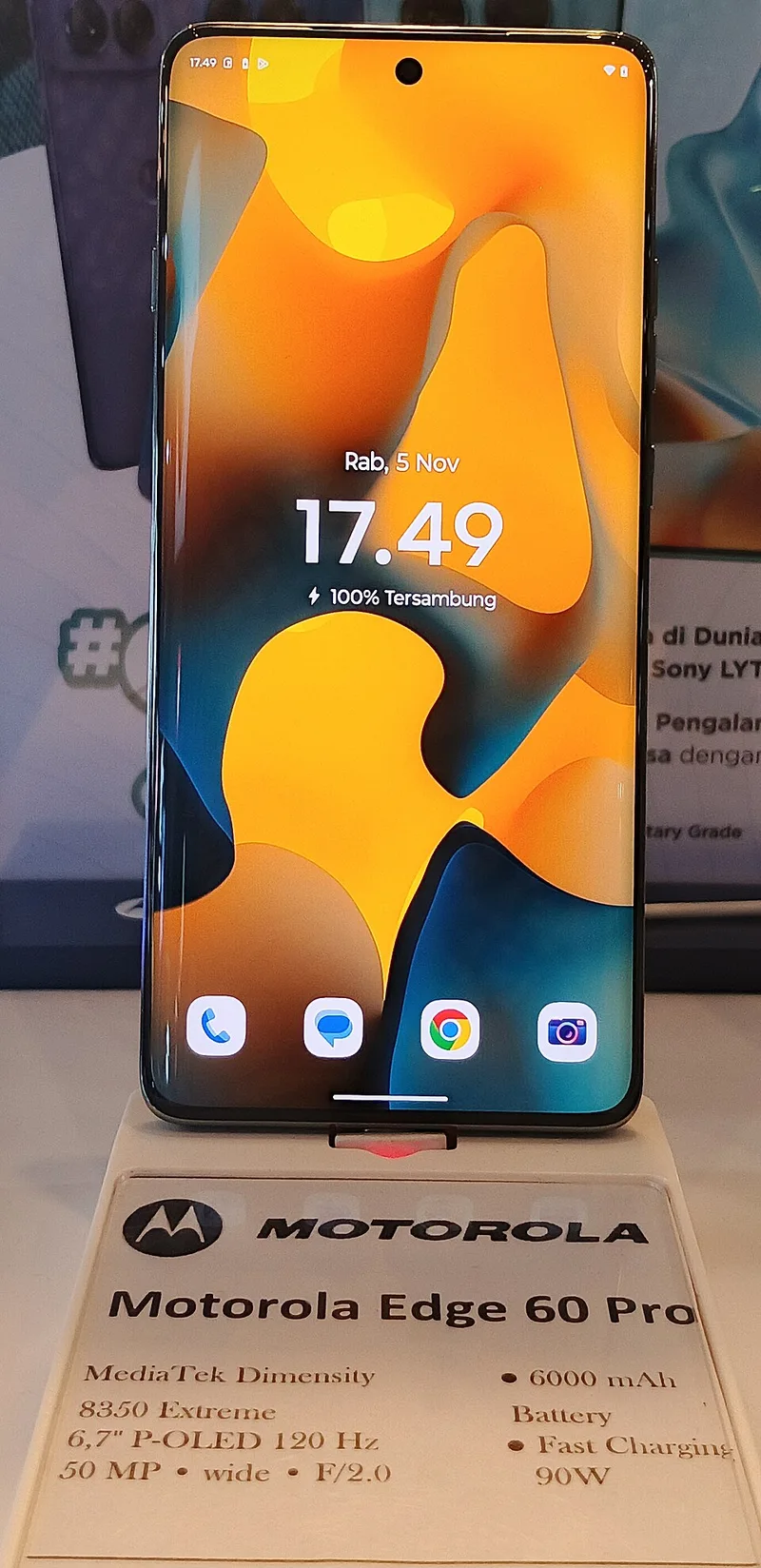
The Motorola Edge 60 Pro doesn't get the marketing budget or retail floor space of a Galaxy or a Pixel, and it isn't sold through every US carrier the way an iPhone is. That's a shame, because on paper it undercuts most of its rivals on price while matching or beating them on several specs that actually matter day to day — charging speed, screen brightness, and build quality among them. If you're willing to buy a phone that doesn't show up in every carrier ad, it's worth a serious look.
What you're actually getting
The Edge 60 Pro runs a MediaTek Dimensity 8350 Extreme chipset built on a 4nm process, paired with either 8GB or 12GB of LPDDR5X RAM and up to 512GB of UFS 4.0 storage. That's a genuinely capable mid-to-upper-tier setup — not quite Snapdragon 8 Elite territory, but well ahead of budget silicon, and more than enough for gaming, multitasking, and camera processing without stutter.
Its 6.7-inch P-OLED display runs at 1220x2712 with a 120Hz refresh rate, giving it smooth scrolling and sharp text at a size most people find comfortable to hold one-handed. Where it starts to separate from cheaper competitors is the camera array: a 50MP main sensor built around Sony's LYT-700C, a 10MP 3x telephoto, and a 50MP ultra-wide, plus a 50MP front camera that outresolves what most flagships put on the front of the phone.
Battery and charging: this is where it wins
Motorola put a 6,000mAh silicon-carbon battery in the Edge 60 Pro — a genuinely large cell for a phone this size, made possible by the higher energy density silicon-carbon chemistry allows compared to older graphite designs. Charging is rated at 90W wired, which gets you from empty to a usable charge in well under half an hour, plus 15W wireless and even 5W reverse wireless charging for topping up earbuds or a smartwatch. For comparison, most phones at twice this price either cap wired charging lower or skip reverse wireless entirely.
Build and design
At 186 grams and 8.2mm thick, the Edge 60 Pro is comfortably in line with typical flagship dimensions — not the thinnest phone around, but not a brick either. Motorola offers it in three Pantone-certified colorways (Shadow, Dazzling Blue, and Sparkling Grape), a partnership Motorola has leaned on for several generations now to differentiate its finishes from the usual black-silver-blue rotation every other brand offers.
Software: closer to stock Android than most
Motorola has stuck with a near-stock Android approach for years, layering in a handful of genuinely useful additions — Moto gestures like a chop-chop motion to toggle the flashlight, a twist-to-launch-camera shortcut, and Moto Secure for privacy controls — without burying the interface under a heavy custom skin the way Samsung's One UI or Xiaomi's HyperOS do. For buyers who find Samsung's app duplication (two app stores, two photo galleries, two assistants) frustrating, the Edge 60 Pro's lighter software layer is a real point in its favor, even before you factor in the price difference.
How it stacks up against similarly priced rivals
The two closest competitors in spirit are the OnePlus 13R and the Nothing Phone (3), both of which chase the same "flagship features, mid-tier price" positioning. The OnePlus 13R runs a full Snapdragon 8 Gen 3 — a step up in raw CPU/GPU performance over the Edge 60 Pro's Dimensity chip — but caps wired charging lower in some regions and doesn't match Motorola's silicon-carbon battery capacity. The Nothing Phone (3) leans harder into design as a selling point with its distinctive transparent back and Glyph lighting, but its 5,150mAh battery and 65W charging are both a step behind what the Edge 60 Pro offers. Neither rival beats Motorola on the specific combination of battery size, charging speed, and camera versatility — they each win on a different single axis instead.
What you're giving up
Being realistic about trade-offs matters more on a value phone than on a $1,300 flagship, since the whole pitch depends on not overpromising.
The honest trade-offs: MediaTek chips, even good ones like the Dimensity 8350 Extreme, still lag slightly behind top-tier Snapdragon and Apple silicon in sustained gaming benchmarks and some GPU-heavy workloads. Motorola's software update commitment has historically trailed Samsung, Google, and Apple — check current promised OS/security update terms before buying if longevity matters to you. And because Motorola doesn't have Apple's or Samsung's retail presence, in-person support and trade-in programs are thinner in many markets.
Who should actually buy this
If your priority list is battery life, fast charging, and a genuinely good camera setup, and you're willing to trade away brand recognition and best-in-class benchmark numbers to save several hundred dollars versus a Galaxy S25 Ultra or iPhone 17, the Edge 60 Pro is one of the stronger value plays on the market right now. It's not the phone for someone chasing the absolute fastest chip or the longest guaranteed software runway — for that, look at our OnePlus 13 vs 13R comparison or the Galaxy S25 Ultra instead. But for buyers who read spec sheets rather than brand names, this is exactly the kind of phone worth cross-shopping before you default to a bigger logo.
Verdict
The Edge 60 Pro proves that you don't need flagship pricing to get a 6,000mAh battery, 90W charging, and a genuinely capable triple-camera system. It won't out-benchmark a Snapdragon 8 Elite phone, and Motorola's software support timeline needs checking before you commit, but as a value-focused alternative to the big three brands, it earns a spot on any serious shortlist.
In practice, that makes it a strong pick for three kinds of buyers specifically: people upgrading from an aging mid-range phone who want a genuinely noticeable jump in battery life and camera quality without spending flagship money; people who travel or commute a lot and put a premium on fast charging over raw benchmark scores; and anyone who's grown tired of manufacturer skins and just wants Android to look and feel close to how Google designed it. If none of those describe you — if you specifically need the best possible sustained gaming performance, the longest guaranteed update window, or a stylus — the Edge 60 Pro isn't the phone built for that use case, and a Galaxy S25 Ultra or OnePlus 13 will serve you better despite the higher price tag.