Nothing Phone (3) Review: Does the Design Justify the Price?
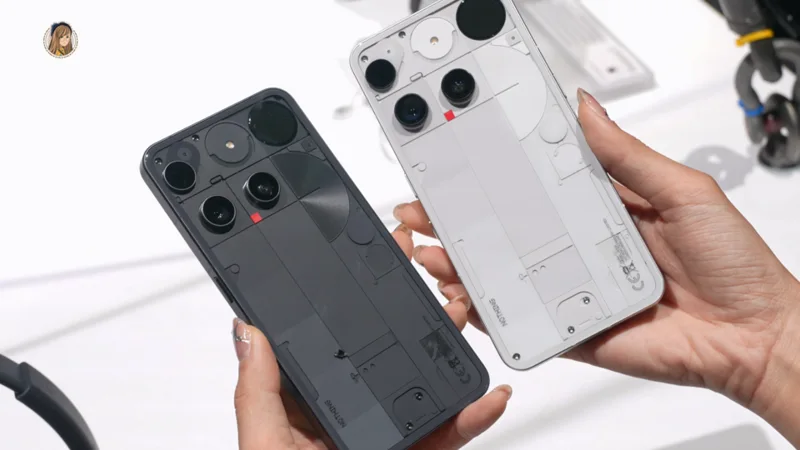
Nothing built its reputation on making phones look and feel different from the endless parade of black-glass slabs, and the Nothing Phone (3) continues that approach at a genuinely flagship-adjacent price of $799. The question worth asking isn't whether it looks distinctive — it does — but whether the hardware underneath earns that price tag against more established competition.
Design and the Glyph Interface
The signature transparent-adjacent back panel and Glyph lighting system return, now more refined than the earlier Phone (1) and (2) generations. It's a legitimately useful feature for some people (glanceable notifications, custom ringtone-style light patterns, visual timers) and a complete non-factor for others who'll never touch the customization menu after the first week. Either way, it's the single biggest reason the Phone (3) doesn't disappear into the crowd the way most Android flagships do on a store shelf.
Build quality around that distinctive back panel holds up well day to day — there's no sense that Nothing sacrificed structural integrity to achieve the transparent-adjacent look, and the phone survives normal pocket-and-bag wear like any other flagship-tier device.
Performance: Snapdragon 8s Gen 4
Nothing chose the Snapdragon 8s Gen 4 rather than the full 8 Gen 4/8 Elite tier chip that true flagships from Samsung and OnePlus are running this cycle. In real-world use — browsing, social apps, most games at high settings — this doesn't show up as a meaningful limitation. Where it does show up is in the most demanding mobile games at maxed-out graphics settings and in sustained thermal throttling during longer gaming sessions, both areas where the true flagship chips still pull ahead. For the vast majority of buyers this is a reasonable trade-off Nothing made to hit its price point, not a dealbreaker.
RAM configurations of 12GB or 16GB depending on the storage tier you pick keep multitasking comfortable, and app-switching performance in daily use feels indistinguishable from phones running noticeably higher-tier chips.
Camera
The triple 50MP rear array (main, ultra-wide, and telephoto all at 50MP) is a genuinely strong specification on paper, and daylight shots back it up with accurate color and good dynamic range. Low-light performance is solid but not chart-topping — it trails the computational photography Google and Apple squeeze out of their processing pipelines, though it's competitive with other phones in this price bracket.
Nothing's own camera app processing leans toward a more neutral, less aggressively HDR'd look than some Android rivals, which photography-minded buyers tend to appreciate since it leaves more room to adjust in post rather than fighting an over-processed base image.
Battery Life and Charging
At 5150mAh, battery capacity is respectable rather than class-leading, and Nothing's own OS optimizations keep it comfortably at a full day of moderate-to-heavy use. 65W wired charging gets you back to a usable charge quickly, though it falls short of the 80-100W speeds some rivals — including OnePlus's own lineup — now offer. 15W wireless charging is present and works reliably with standard Qi chargers, though it's not the fastest wireless option on the market either.
Software: Nothing OS 3.5
Built on Android 15, Nothing OS remains one of the cleaner, closer-to-stock Android experiences you can buy, with the dot-matrix aesthetic carried through consistently rather than feeling like a reskin bolted onto stock Android. Nothing has also committed to a reasonable update window, though it still trails Google and Samsung's longest support commitments — worth factoring in if you tend to keep a phone for four-plus years.
Everyday Ergonomics
At 218g and 9mm thick, the Phone (3) is on the heavier and thicker side of current flagships, a direct consequence of the design choices that make its back panel distinctive. It's not uncomfortable, but if you've been using a notably slimmer phone, expect an adjustment period in the first week.
Who It's Actually For
The Phone (3) makes the most sense for people who've grown tired of every flagship looking identical in a store display and are willing to trade a small amount of raw gaming performance for a device that genuinely stands out. It's also a strong pick for anyone who values a cleaner, less bloated software experience — Nothing OS consistently ranks among the least cluttered Android skins available, without the duplicate app stores and pre-installed bloatware that still plague some competitors at this price.
It's a weaker pick if mobile gaming at maximum settings is a core use case, or if you specifically need the fastest possible wired charging for a demanding daily routine — both are areas where dedicated gaming-flagship or charging-focused phones will outperform it by a clear margin.
Availability and Ecosystem
Nothing has expanded its retail and carrier partnerships significantly since the original Phone (1) launch, making the Phone (3) meaningfully easier to buy through normal retail channels than earlier generations, which were more of a direct-to-consumer, enthusiast-only proposition. The company's growing lineup of earbuds and accessories designed to match the phone's aesthetic is also worth considering if you like buying into a coordinated hardware ecosystem rather than mixing and matching brands.
Comparing It to the iPhone Camp
Anyone cross-shopping this against an iPhone should know the two ecosystems remain fundamentally different experiences rather than interchangeable options at similar prices — Nothing OS offers deeper customization and more open file access, while iOS offers tighter integration with other Apple hardware and a longer guaranteed software support window. Neither is objectively "better"; they're built around different priorities, and which one suits you depends entirely on what you already own and how you like to use a phone day to day.
One practical difference worth flagging directly: accessory availability. Apple's ecosystem of cases, chargers, and third-party accessories dwarfs anything currently built around Nothing's more niche hardware lineup, which is a real consideration if you like having dozens of case options to choose from rather than a handful of official and semi-official accessories.
Value Verdict
At $799, the Phone (3) competes directly with genuinely excellent options, and it wins on personality rather than raw specs. If distinctive design and the Glyph Interface actually appeal to you, it's an easy recommendation. If you're purely spec-chasing at this price, a Snapdragon 8 Elite phone will out-benchmark it — but won't look anything like it on a table next to five other black rectangles.