MediaTek's Dimensity Chips Are No Longer 'Budget Silicon'
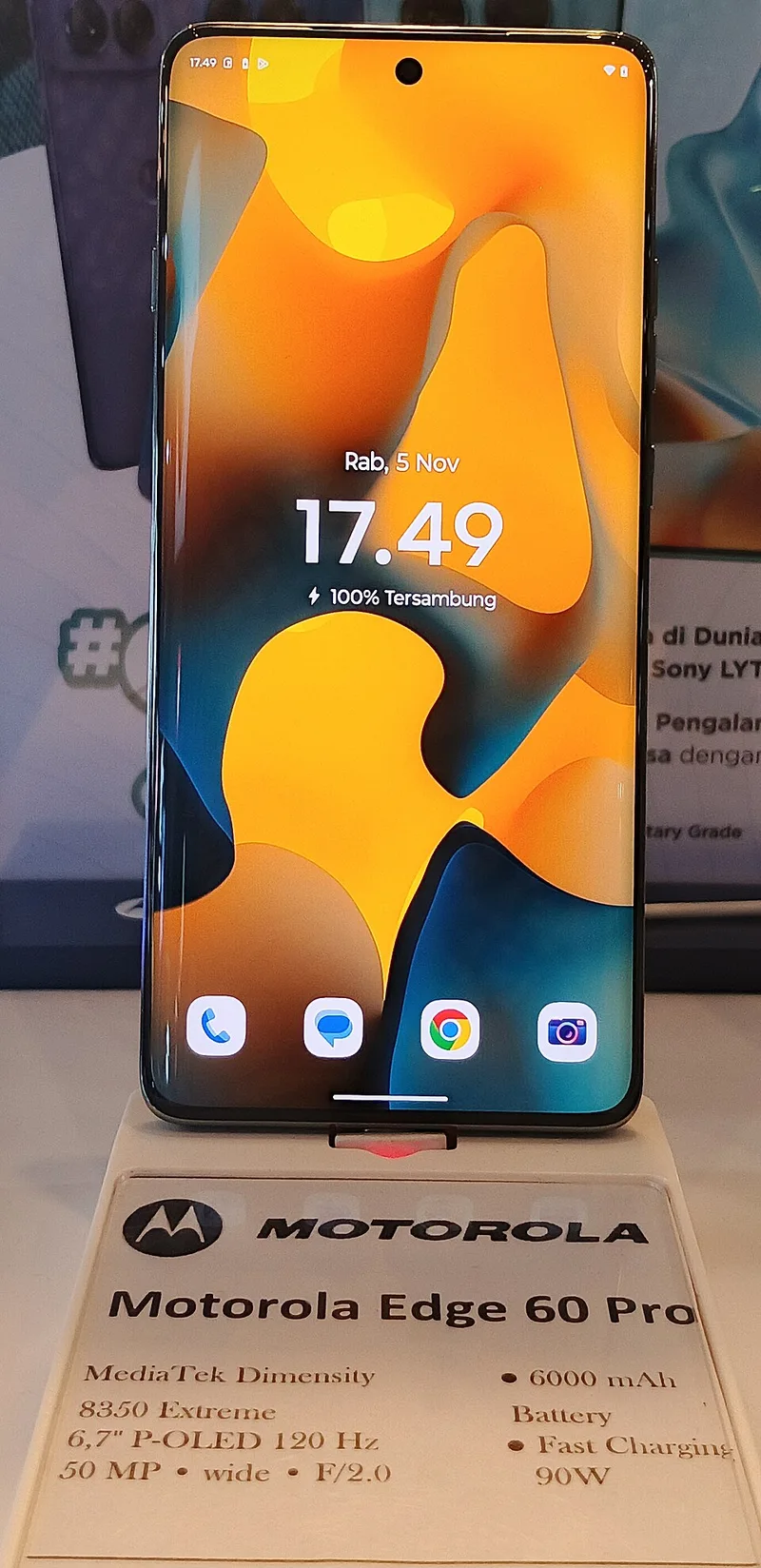
For most of the last decade, "MediaTek" on a spec sheet was shorthand for "budget phone" — a chipset choice that signaled a manufacturer was optimizing for price over performance. That reputation is increasingly out of date. The Motorola Edge 60 Pro ships with a MediaTek Dimensity 8350 Extreme, a chip that trades blows with Qualcomm's previous-generation flagship silicon in real benchmarks, and it's part of a broader pattern of MediaTek chips showing up in phones that would have exclusively run Snapdragon just a few years ago.
What actually changed
MediaTek's shift didn't happen overnight, and it wasn't primarily a marketing repositioning — it followed years of genuine investment in higher-end chip design, culminating in the Dimensity 9000 series establishing MediaTek as a credible flagship competitor rather than strictly a budget and mid-range supplier. The "Extreme" variants, like the Dimensity 8350 Extreme in the Edge 60 Pro, take a slightly different approach: rather than chasing the absolute peak benchmark numbers Qualcomm's top-tier Snapdragon 8 Elite achieves, MediaTek specifically bins and tunes these chips for strong sustained performance — meaning how well a chip holds its clock speed over 20-30 minutes of continuous load, like a long gaming session, rather than how high it can spike for a few seconds in a quick benchmark run.
That distinction matters more in practice than it sounds. A chip that posts an impressive peak number but throttles hard after two minutes of sustained gaming will feel noticeably slower in a real 45-minute session than a chip with a lower peak number but a flatter, more consistent performance curve. MediaTek's newer flagship-adjacent chips have specifically targeted this real-world sustained-performance metric rather than optimizing purely for the peak numbers that dominate spec-sheet marketing.
Why manufacturers are choosing MediaTek more often
Cost is the most obvious factor — MediaTek chips typically carry a lower licensing and unit cost than Qualcomm's equivalent-tier Snapdragon silicon, which lets a manufacturer like Motorola build a phone with genuinely competitive specs — a large silicon-carbon battery, a capable camera array, a sharp high-refresh display — at a price point that would require compromising elsewhere if the phone used a pricier Snapdragon chip instead. That cost savings gets passed through most visibly in exactly the areas that matter most to typical buyers: battery capacity, charging speed, and camera hardware rather than raw chipset benchmarks most people never actually check.
MediaTek has also built increasingly credible 4nm and 3nm manufacturing process partnerships with TSMC, closing what used to be a real fabrication-technology gap with Qualcomm's own chip sourcing. A chip built on a smaller process node runs more efficiently at a given performance level — better sustained performance and battery efficiency for a similar transistor budget — and MediaTek reaching feature parity on process node access has removed one of the clearer technical advantages Qualcomm chips used to hold independent of pure chip design.
Where the gap still exists
None of this means MediaTek has fully closed the gap at the absolute top end. The Snapdragon 8 Elite, found in phones like the OnePlus 13 and ASUS Zenfone 12 Ultra, remains the benchmark leader for peak raw performance, and Qualcomm's flagship-tier GPU performance in particular still generally leads MediaTek's best equivalent chip in the most demanding mobile games at maximum settings. Software optimization is another area where Qualcomm retains an edge in some markets — certain regional carrier features, particular 5G band configurations, and camera ISP (image signal processor) tuning have historically been more mature on Qualcomm silicon simply due to a longer track record of manufacturer partnerships built around it.
The practical gap, though, has narrowed from "clearly a step down" to "a reasonable trade-off for the price," which is a meaningfully different position for MediaTek to be arguing from than it held five years ago.
What this means for how you should actually shop
The old shorthand — "just check if it's Snapdragon or MediaTek and assume Snapdragon wins" — is no longer a reliable way to judge a phone's real-world performance. A phone like the Edge 60 Pro, running a well-tuned Dimensity chip, can comfortably out-benchmark and out-sustain older or lower-tier Snapdragon chips found in phones costing considerably more, simply because chip generation and specific tier matter more than brand name alone. When comparing two phones on chipset, it's worth looking up the specific chip model's actual sustained-performance benchmarks — independent review outlets that run stress tests rather than single quick passes are the most reliable source — rather than assuming one manufacturer's name guarantees better performance across the board.
Gaming performance is where this comparison gets tested hardest
Sustained gaming is arguably the single toughest real-world test of a chip's thermal tuning, since it's one of the few common workloads that keeps the GPU under heavy load continuously for long stretches rather than in short bursts. Our own gaming phones guide found that the Edge 60 Pro's Dimensity chip, paired with a large 6,000mAh battery and generous internal cooling, holds up better across a long session than its raw benchmark number alone would suggest — exactly the sustained-performance behavior MediaTek has specifically prioritized in its recent flagship-tier chip designs. That's a useful real-world data point for anyone deciding whether a MediaTek-powered phone can handle serious mobile gaming without feeling like a compromise purely because of the chip badge on the box.
The bigger competitive picture
A genuinely competitive MediaTek is good news for buyers regardless of which chip ends up in your next phone, since real competition at the flagship tier pushes both companies to improve pricing and performance faster than either would in a market with a single dominant supplier. Qualcomm's response to MediaTek's rise has already shown up in more aggressive pricing on mid-tier Snapdragon chips and faster generational improvements at the low and middle of its lineup — exactly the kind of competitive pressure that tends to benefit buyers across every price tier, not just the flagship phones getting the most attention in this comparison. If MediaTek keeps closing the gap at the very top end the way it already has in the upper-mid tier, the next few generations could genuinely reshape which chipset brand buyers default to trusting.