Oppo Find X8 Review: Still a Compact Flagship Worth Considering
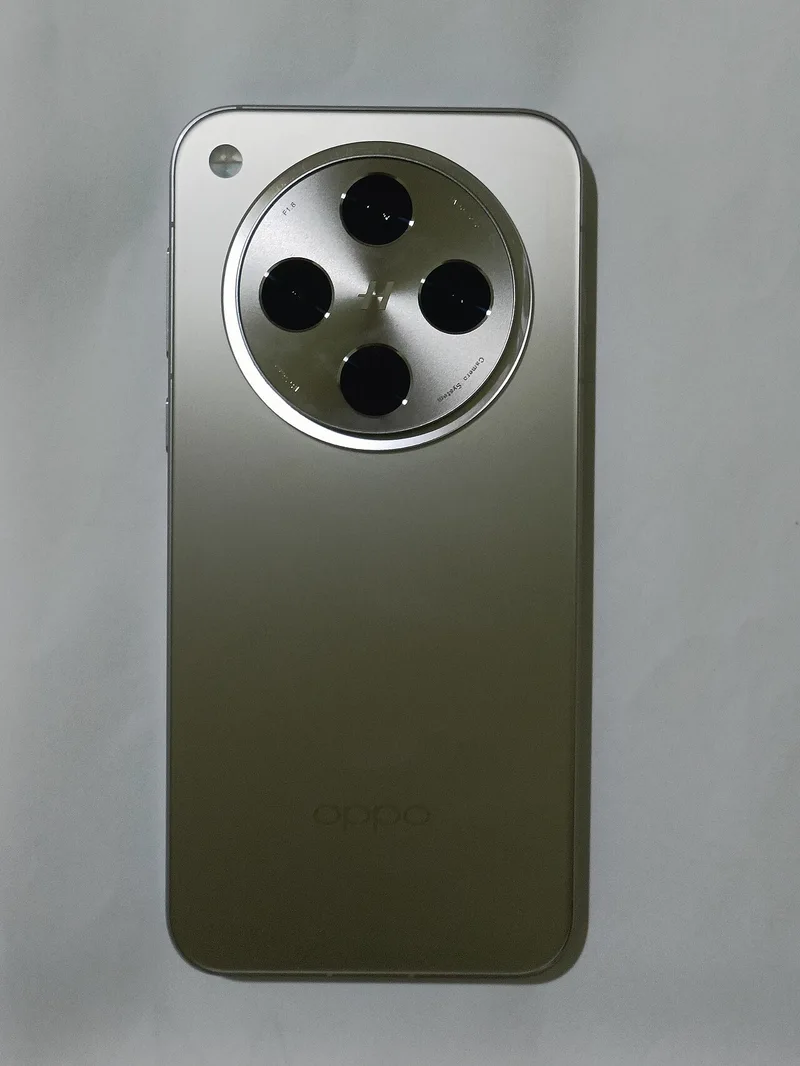
Some phones age gracefully because their strengths are not tied to a single year's fashion. The Oppo Find X8, launched on October 30, 2024 and on sale from November 21, 2024, is one of them: a compact flagship with a 3nm MediaTek chip, a triple 50MP camera system that includes a 3x periscope telephoto, an unusually complete water and dust rating, and a battery that is generous for a compact phone. Its successor, the Find X9, has since arrived, which makes the X8 an interesting previous-generation option. This page reads through the published specifications and explains what they mean for someone deciding whether to buy it now. It is based on specifications, not on our own testing.
The Find X8 Family
The Find X8 series has three models. The Find X8 and Find X8 Pro launched together in late 2024, and the Find X8 Ultra followed in April 2025. The standard Find X8 is the smallest and lightest of the three, measuring 157.4 x 74.3 x 7.9mm and weighing 193 grams. The Pro, for comparison, is 162.3 x 76.7 x 8.2mm and 215 grams, and the Ultra is larger still. If you find phones of 6.8 inches and above unwieldy, the standard model's 6.59-inch screen and 193-gram weight are its main selling points, and they are noticeably easier to carry than most flagships released in the same period.
Construction and Protection
All three models use glass and aluminium construction with a flat display, and Gorilla Glass 7i is used on the front and back. The whole family carries both IP68 and IP69 ratings. IP68 covers dust tightness and submersion, and IP69 adds resistance to hot, high-pressure water jets, which is a step beyond what many flagships list. For someone who washes their hands and phone with equal enthusiasm, or who uses their phone near the sink or in the rain, that is a valuable margin. Color choices for the standard model are Star Grey, Space Black and Shell Pink. If you would like to know exactly what those ratings mean, our explainer on durability certifications breaks them down. An optical fingerprint sensor sits under the display on the standard and Pro models, while the Ultra uses an ultrasonic one.
Display
The standard Find X8 has a 6.59-inch LTPO AMOLED display at 2760 x 1256 resolution with a 120Hz refresh rate and a peak brightness rating of 4500 nits. LTPO technology lets the panel vary its refresh rate over a wide range, saving power when the screen is showing static content. The peak brightness figure is high, though as with all such numbers it applies to small areas of bright HDR content for short periods rather than to the whole screen for sustained use. Stereo speakers with Dolby Atmos support and an infrared port round out the media and convenience features. That infrared blaster is a small pleasure that has become rare on modern phones; it can control TVs, air conditioners and other appliances that still rely on infrared remotes.
Chipset and Memory
Both the Find X8 and X8 Pro use the MediaTek Dimensity 9400 chipset, built on a 3nm process, with Arm's Immortalis-G925 graphics processor. RAM is 12GB or 16GB, and storage runs from 256GB up to 1TB across the series using UFS 4.0 on the standard and Pro models. There is no microSD card slot. The Ultra uses a Qualcomm Snapdragon 8 Elite with faster UFS 4.1 storage, so if you are set on a Snapdragon chip in this generation, that is where to look. For a broader view of how the two chip families compare in daily use, our piece on how Dimensity chips have closed the gap is a helpful read. We have not run benchmarks on this phone and are not quoting performance numbers.
Cameras
The camera system was built in partnership with Hasselblad, which contributes color calibration. The standard Find X8 has three 50MP cameras. The main camera is f/1.8 with a 24mm equivalent focal length and optical stabilization. The ultrawide is f/2.0 at 15mm equivalent. The third is a periscope telephoto at f/2.6 and 73mm equivalent, providing 3x optical zoom with optical stabilization. Having a genuine periscope lens rather than a cropped main sensor means detail at portrait distance is captured optically rather than interpolated. The Pro model adds a second periscope lens at 6x optical zoom, making it one of the first globally available phones with two periscope telephotos, but that is not on the standard model.
The front camera is a 32MP unit at f/2.4. All the cameras, front and back, support 4K video at 30 or 60 frames per second on the standard and Pro models, with the Ultra's main camera going up to 4K at 120fps. For people who care about zoom range, our comparison guide to zoom camera phones explains how 3x, 5x and 6x lenses behave in practice and when a bigger number is actually helpful.
Battery and Charging
The standard Find X8 has a 5630mAh battery, the Pro has 5910mAh and the Ultra 6100mAh silicon-carbon. On the standard model, charging is 80W wired, 50W wireless, and 10W reverse wireless for topping up accessories. Those are high figures for a compact phone, and 50W wireless charging in particular is rarer than fast wired charging. Sustained battery life will depend on software, network conditions and usage, and we do not have measurements to share.
Software and Connectivity
The phone launched with ColorOS 15, based on Android 15, and Oppo released ColorOS 16 in October 2025. Check whether this model has received it in your region before buying. ColorOS includes a Live Alerts capsule for showing ongoing activities at the top of the screen, and China-market models add satellite connectivity for emergency messaging. Connectivity includes Wi-Fi 7, Bluetooth 5.4 and NFC, and SIM options are nano-SIM plus eSIM or dual nano-SIM depending on the market.
Who Should Buy It Now
The Find X8 remains attractive to buyers who want a compact flagship with a real telephoto lens, an IP69 rating and a large battery, and who do not need the very latest chip. Because the X9 has arrived, prices on the X8 in many markets should be lower than at launch, though we do not publish live prices and you should check current listings. Our guide to buying last year's flagship offers a decision framework. The trade-offs to weigh are a shorter remaining software horizon than a brand-new phone, the need to check network band support for your carrier if you import one, and the fact that ColorOS is a heavily customized version of Android.
Verdict
The Find X8 is a well-rounded compact flagship. Its standout attributes are the combination of a 3x periscope telephoto, IP68 and IP69 protection, an infrared blaster and a battery and charging setup that stand out among phones of this size. Its drawbacks are the lack of expandable storage, the absence of a second telephoto that the Pro model gets, and the usual need to check update policy and band support for your region. We have not tested it ourselves, so confirm battery and camera performance in independent reviews. For a buyer who values size and endurance, it remains a strong option in the previous-generation market.