Oppo Find X9 Review: A Compact Flagship With a 7025mAh Battery
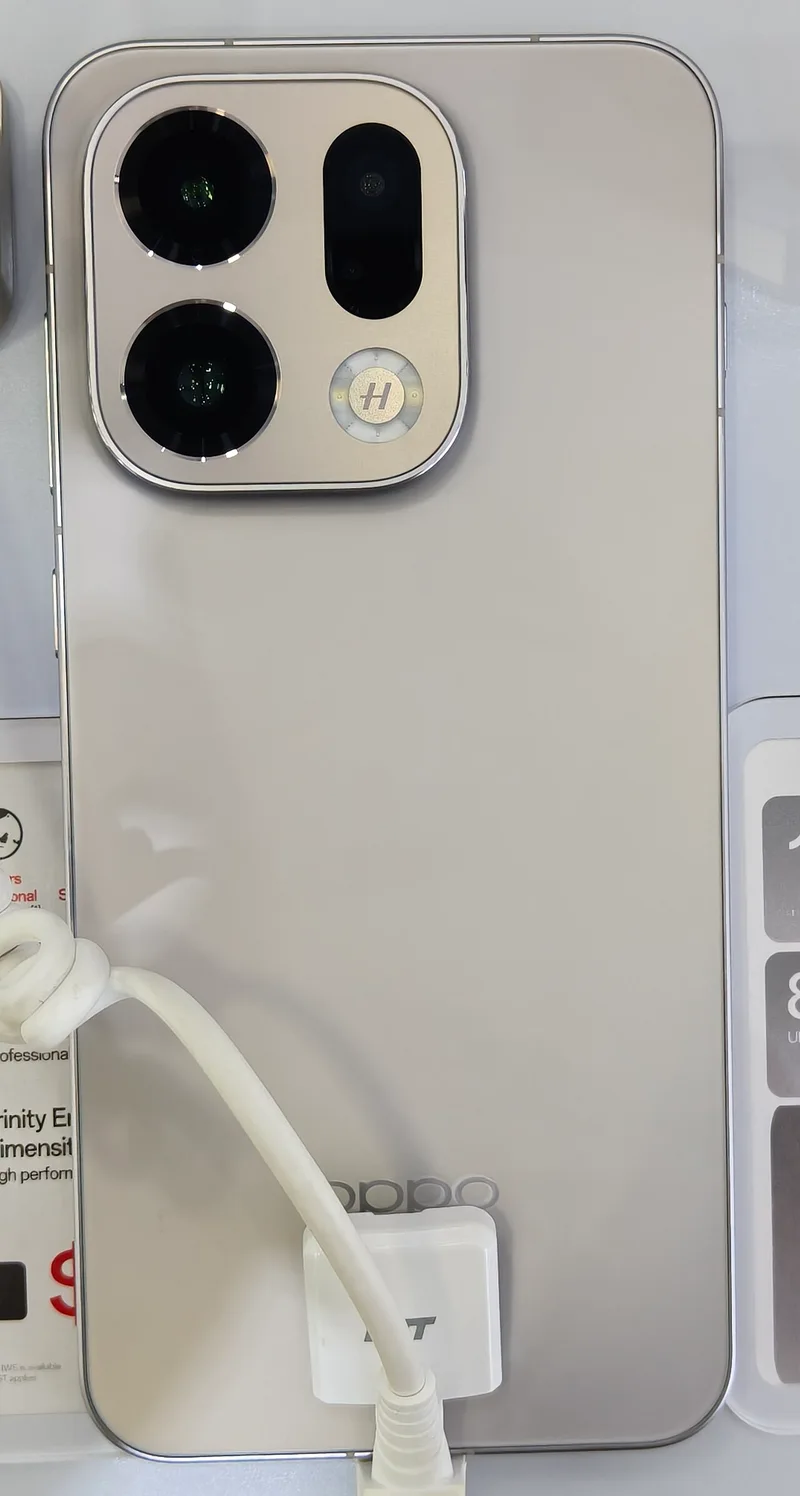
Oppo's Find X line has always been the company's showcase for camera and battery ambitions, and the Find X9, launched in October 2025, leans on both. It pairs a large 7025mAh silicon-carbon battery with a flagship MediaTek chip, a Hasselblad-tuned triple camera system that includes a 50MP periscope telephoto lens, and a 6.59-inch display that is sized for people who find larger phones tiresome. This page goes through the published specifications, explains which of them matter in daily use, and flags the compromises. It is a specification-based analysis rather than a hands-on test, and where the sources are silent we say so.
Where It Fits
The Find X9 series was announced on October 16, 2025, with sales beginning around October 22. It is the direct successor to the Oppo Find X8, and the family later expanded to include a Find X9 Pro, a Find X9s, and a global Find X9 Ultra in 2026. The standard Find X9 is the compact-leaning entry in that family: smaller and lighter than the Pro, with a smaller telephoto sensor but the same overall design language. It is the model to look at if you want most of the flagship experience in a body that does not feel oversized.
Design and Durability
The Find X9 measures 157.0 x 73.9 x 8.0mm and weighs 203 grams. Considering the size of its battery, that is a notably restrained package. The frame is aluminium, the back is glass, and the front is covered by Corning Gorilla Glass 7i, a step below the Victus 2 used on the Pro model. Colors are Space Black, Velvet Red and Titanium Grey. Water and dust protection is listed as IP66, IP68 and IP69, which covers dust ingress, immersion and high-temperature, high-pressure water jets. That is one of the more complete rating stacks you will see on a phone, and it is a reassuring one for people who use their phone outdoors, in the kitchen or near a pool. An under-display fingerprint sensor handles biometrics, and the phone has stereo speakers and an X-axis linear vibration motor for haptic feedback. If ratings like these are unfamiliar, our explainer on IP68 and other durability ratings shows what each code covers.
Display
The screen is a 6.59-inch AMOLED panel at 1256 x 2760 resolution, about 460 pixels per inch, with a 120Hz refresh rate and 3840Hz pulse-width modulation dimming. High PWM frequencies are intended to reduce visible flicker at low brightness levels, which some people find easier on the eyes in dark rooms. Brightness is rated at 800 nits typical, 1800 nits in high-brightness mode and 3600 nits peak, and the display supports Dolby Vision, HDR10+ and HDR Vivid. The sources list the Pro model's panel as LTPO and this one as a standard AMOLED. LTPO panels can drop to very low refresh rates to save power, so this is a small efficiency consideration rather than a visible one. For the average buyer, the screen specification is solid at every level, and the compact size is one of its chief appeals.
Performance
The phone is powered by the MediaTek Dimensity 9500, built on a 3nm process with an eight-core layout: one C1-Ultra core at up to 4.21GHz, three C1-Premium cores at 3.5GHz and four C1-Pro cores at 2.7GHz, paired with an Arm G1-Ultra graphics processor. RAM is 12GB or 16GB of LPDDR5X, and storage is 256GB or 512GB of UFS 4.1. A vapor-chamber cooling system is included to manage heat during sustained workloads such as gaming and video recording. If you have wondered whether a MediaTek flagship can match a Snapdragon one, the answer has shifted over the years, and our articles on MediaTek versus Snapdragon explain how to think about that choice. We have not benchmarked the Find X9, so we are not making performance claims beyond the published specifications.
Cameras
All three rear cameras are 50MP and were developed with Hasselblad, which contributes color calibration. The main camera is a Sony LYT-808 sensor, 1/1.43 inch, with an f/1.6 aperture, a 23mm equivalent focal length and optical stabilization. The ultrawide camera has a 120 degree field of view at f/2.0. The third camera is the interesting one: a 50MP periscope telephoto at 73mm equivalent and f/2.6, offering 3x optical zoom, with optical stabilization. A telephoto at that focal length is a good portrait lens and comfortably reaches across a room or a stage.
Supporting hardware includes laser autofocus and a color spectrum sensor that helps with white balance. Video recording goes up to 4K at 120 frames per second, with Dolby Vision, 10-bit color and LOG profiles for people who want to grade their footage. The front camera is a 32MP fixed-focus unit at f/2.4; the Pro model upgrades this to a 50MP autofocus camera. Fixed-focus selfie cameras can be perfectly good at arm's length but are less forgiving for close-up shots. If long-range photography matters to you, our zoom camera roundup is worth reading to understand what different focal lengths can and cannot do.
Battery and Charging
This is the most compelling part of the specification. The battery is a 7025mAh silicon-carbon cell. Silicon-carbon chemistry packs more energy into the same volume than traditional graphite cells, which is why capacities well above 6000mAh have started to appear in phones of normal thickness. For context, many flagship phones in this size class carry batteries in the 4000 to 5500mAh range, so the Find X9 has a meaningful capacity advantage on paper. Charging is 80W wired using Oppo's SuperVOOC standard (with 80W UFCS and 55W PPS modes for compatible chargers) and 50W wireless using AirVOOC, plus 10W reverse wireless charging for accessories. A big cell plus fast charging is a strong combination for travellers and heavy users. Our ranking of best battery life phones puts capacity claims like this in context, but real endurance will depend on software efficiency and usage, and we have not measured it.
Software and Connectivity
The phone runs Android 16 with ColorOS 16 out of the box. ColorOS is a heavily customized Android skin with many additional features, and it rewards buyers who like configuring their phones; those who prefer near-stock Android may find it busier. SIM configurations vary by region, with a nano-SIM plus eSIM version or a dual nano-SIM version. There is no microSD card slot, so choose your storage tier carefully. Network band support differs by region, with separate international, China and India variants, so check the exact bands supported for your carrier before importing a unit.
Who Should Buy It
The Find X9 suits someone who wants a compact-to-mid-size flagship with unusually large battery capacity and a capable telephoto camera, and who is comfortable with a Chinese-brand Android skin. It is a good fit for travellers, people who charge less often than they would like to admit, and photographers who value a 3x portrait lens. It is less suited to buyers who need a published multi-year update promise, which is not stated in the sources we used, or who want a near-stock Android experience. The Find X9 Pro adds a 200MP telephoto, a larger 6.78-inch LTPO display and a 7500mAh battery, and it is the natural step up if the camera is your priority.
Verdict
On paper, the Oppo Find X9 is one of the more interesting compact flagships of its generation, and it makes its case through battery capacity, fast charging in both wired and wireless forms, and a proper 3x telephoto with Hasselblad color tuning. Its compromises are a fixed-focus front camera, a non-LTPO display and regional variation in bands and software support. We have not tested the phone, so treat the endurance and camera qualities described here as potential rather than proven, and look for independent testing where you live. If those checks come back positive, this is a strong candidate for anyone who wants flagship features without a giant phone.